When you shop for a home in River Oaks, style is never just about looks. You are often weighing architectural pedigree, daily function, renovation freedom, and long-term resale in one of Houston’s most closely watched luxury neighborhoods. The good news is that River Oaks does not force you into a simple old-versus-new choice. Instead, it offers a layered architectural landscape where classic, contemporary, and transitional homes can all make sense depending on your goals. Let’s dive in.
River Oaks Has Never Been One Style
River Oaks was conceived in 1924 as a residential garden community, with trees, esplanades, parks, and open space treated as part of the neighborhood’s identity. That original vision still matters today, and the River Oaks Foundation continues to fund maintenance of esplanades, parks, and traffic islands that reflect the neighborhood’s early plan.
That setting helps explain why architecture in River Oaks feels so distinctive. City of Houston landmark reports show a deliberately mixed vocabulary that includes Colonial Revival, Southern Colonial, English picturesque, Tudor Revival, Mediterranean, Georgian, Norman, and contemporary modern homes. In other words, your decision is usually less about picking a winning style category and more about finding the right fit between the house, the street, and your lifestyle.
What “Classic” Means in River Oaks
Classic River Oaks homes often stand out for their architectural clarity. You see symmetry, formal entries, detailed millwork, steep rooflines, chimneys, and materials that create a strong sense of permanence. For many buyers, that level of character is a major part of the appeal.
City of Houston reports document strong examples across several traditional styles. The Lamberth-Abercrombie House is described as Southern Colonial, with a white columned portico, fanlight entry, symmetry, and dentil molding. The Ben Johnston House and the Hilliard House reflect English picturesque and Tudor influences, with features like half-timbering, steep cross-gables, decorative chimney pots, and vergeboards.
Mediterranean and regionally adapted classic homes also have an important place in River Oaks. City reports note that some Charles Oliver Mediterranean houses remain in the neighborhood, while Bayou Bend was designed as a Gulf Coast-appropriate interpretation of earlier Spanish Creole forms, described by Ima Hogg as Latin Colonial. That kind of architectural pedigree often gives classic homes a level of cachet that goes beyond square footage alone.
Why Buyers Choose Classic Homes
If you are drawn to classic River Oaks architecture, you may value:
- Historic character and visual richness
- Craftsmanship and period details
- A sense of continuity with the neighborhood’s early development
- Strong street presence on established blocks
Classic homes often appeal to buyers who want a residence with a distinct identity rather than a blank canvas. In River Oaks, that can be especially meaningful because the neighborhood’s original garden-suburb plan rewards homes that feel connected to their surroundings.
What Contemporary Means in River Oaks
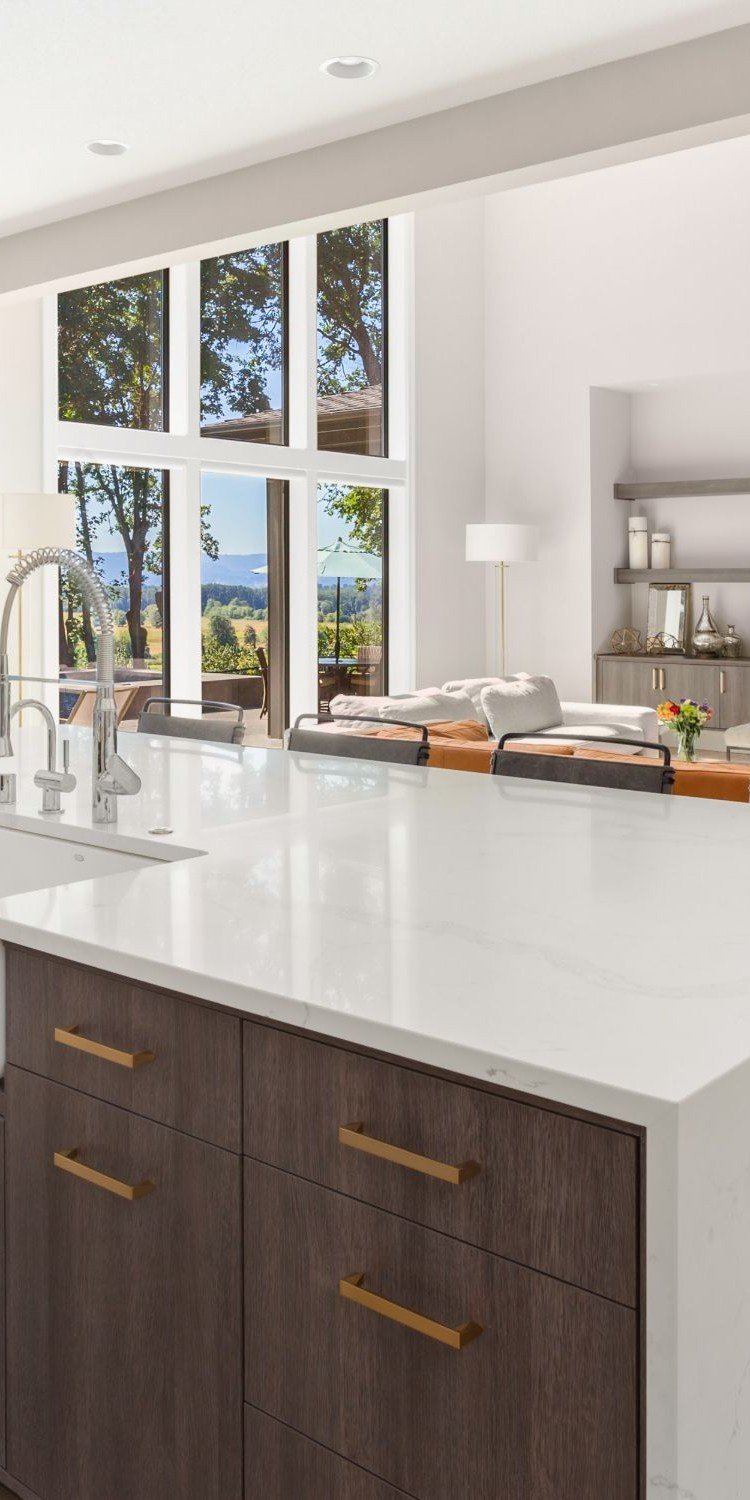
Contemporary River Oaks homes speak a different design language. Instead of ornament and historical reference, they often emphasize massing, light, clean surfaces, and the relationship between indoor and outdoor space. That shift can feel refreshing if you prefer a home that reads as current and restrained.
The City of Houston describes the 1950 Neuhaus House at 2910 Lazy Lane as perhaps Houston’s best example of contemporary modern style. Its documented features include brick-and-glass construction, a flat roof, a transparent core, floor-to-ceiling glazing, and strong indoor-outdoor integration. Another landmark report describes a contemporary River Oaks house with an asymmetrical façade, flat roof, white stucco, smooth unornamented surfaces, and large glass and metal openings.
Why Buyers Choose Contemporary Homes
If you lean contemporary, you may be looking for:
- Cleaner lines and less ornament
- Larger expanses of glass and more natural light
- A more open visual connection between interior and exterior spaces
- A simpler backdrop for current furnishings and art
For some buyers, contemporary design offers more visual flexibility. The home may feel calmer, less formal, and easier to tailor to a modern lifestyle, even within a neighborhood known for architectural history.
Transitional Offers a Middle Ground
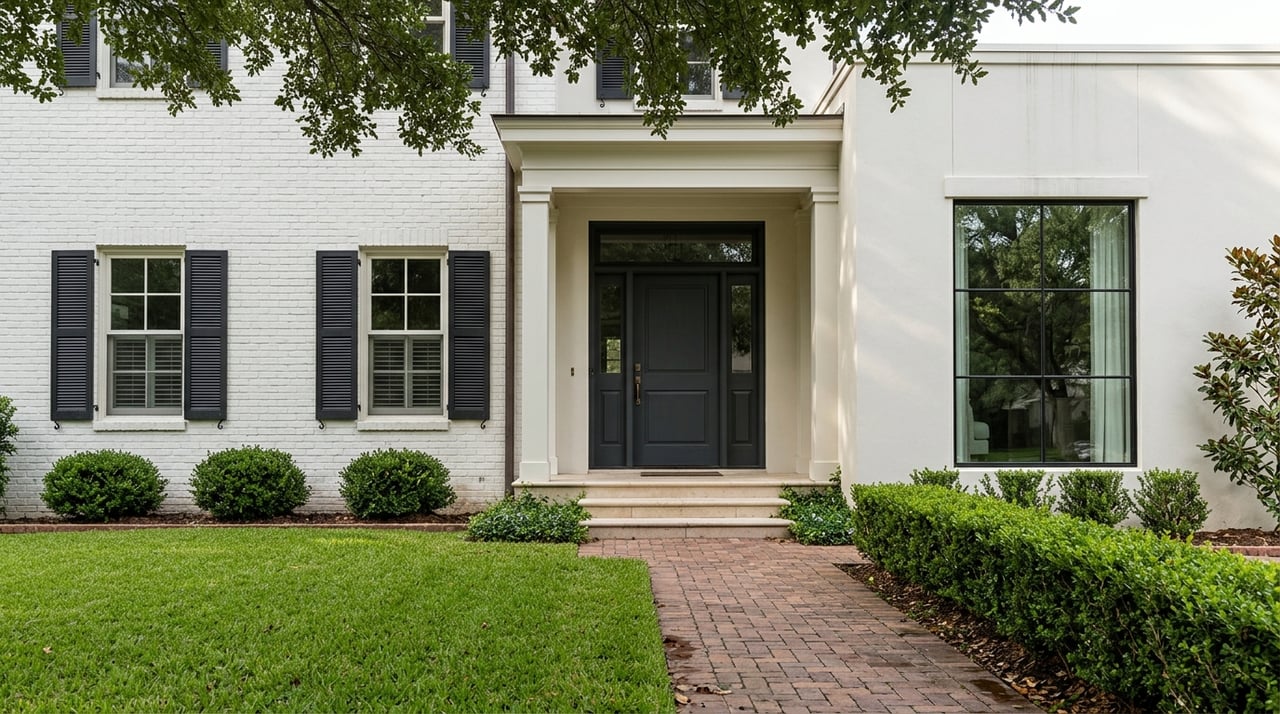
Not every buyer wants a pure classic or a pure contemporary house. Transitional style often works as the middle path, blending traditional structure with a cleaner, more updated look. In practical terms, that can mean simpler lines, a balanced mix of materials, and interiors that feel polished without heavy ornament.
For River Oaks buyers, transitional homes can be an especially comfortable compromise. They can respect the neighborhood’s classic setting while giving you a fresher, less formal atmosphere inside. If you appreciate the presence of traditional architecture but want a softer, more current finish level, transitional design may be the easiest fit.
Think Beyond Appearance
In River Oaks, style decisions have practical consequences. A beautiful façade matters, but so do maintenance demands, renovation limits, and how the home functions over time. The smartest buyers look at both the visual story and the operational reality.
Maintenance in Classic Homes
Traditional homes can require more involved upkeep because they often have older assemblies, more exterior ornament, and more exposed wood and masonry details. If a home has original or period-style elements, preserving the look may also require more careful material matching and more specialized repair decisions.
Texas A&M AgriLife notes that subterranean termites are among the most destructive insect pests of wood in the United States and that moisture plays a major role in termite survival. Risk rises with factors like wood-soil contact, debris or mulch near the foundation, faulty grading, insufficient ventilation, and other moisture sources. For buyers considering older or detail-rich homes, that makes moisture management and exterior condition especially important.
The EPA also notes that sloped roofs are generally less likely than flat roofs to cause major moisture damage over the life of a building, and that roof flashing and window and door detailing are critical parts of moisture control. In a classic home, these systems may be less visible than the architectural details, but they are just as important.
Maintenance in Contemporary Homes
Contemporary design is not automatically lower maintenance. Flat roofs, extensive glazing, and simplified exterior forms still depend on excellent waterproofing and careful building-envelope performance. Moisture can enter through roofs, windows, doors, seams, and other transition points if installation details are not executed or maintained properly.
A River Oaks example underscores the point. The Shult-Connally report notes roof damage from Hurricane Ike and later substantial repair work, including replacement of exterior doors and some rotted windows. So while a contemporary house may look streamlined, it still deserves close attention during your evaluation process.
Preservation Rules Can Shape Your Choice
If you are considering a home with architectural significance, you need to understand what is regulated before you make plans for updates. In Houston, if a property is a City of Houston Landmark or Protected Landmark, exterior alterations, additions, certain new construction in a historic district, relocation, and demolition of a Protected Landmark generally require a Certificate of Appropriateness.
The City of Houston also states that ordinary maintenance and repair do not require a Certificate of Appropriateness. That distinction matters. If you love a classic River Oaks house but know you want to substantially change the exterior, your style preference needs to be matched with the property’s preservation status and your renovation goals.
Resale Is About Buyer Pool, Not Guarantees
In River Oaks, no single style automatically wins on resale. The more realistic way to think about value is through buyer pool, condition, lot quality, and how well the architecture fits its setting. Exceptional properties can perform well across style categories.
HAR’s February 2026 River Oaks Area update showed 3.2 months of inventory, listings down 37.7 percent year over year, an average of 60.5 days on market, and a median sold price of $3,502,162. HAR also describes River Oaks as one of Houston’s most expensive neighborhoods, with prices often ranging from about $2 million to double-digit millions depending on lot and architecture.
Recent Houston Chronicle reporting also shows that River Oaks continues to support major luxury sales. The takeaway is not that classic always beats contemporary, or the reverse. It is that River Oaks rewards properties with strong design execution, compelling presentation, and a setting that feels right for the block.
How Style May Influence Resale
Classic homes often attract buyers who value:
- Provenance and architectural authenticity
- Traditional craftsmanship and formal detailing
- Continuity with River Oaks’ historic identity
Contemporary and transitional homes often attract buyers who value:
- A cleaner visual language
- Updated function and flow
- Fewer decorative constraints
In both cases, the strongest resale potential usually comes from the full package. Lot, block prestige, maintenance history, and neighborhood context often matter just as much as the style itself.
Four Questions to Help You Decide
If you are choosing between classic and contemporary in River Oaks, these are often the most useful questions to ask yourself.
How Much Maintenance Do You Want?
Older or more detailed homes may require more hands-on stewardship. Newer-looking homes may still need serious attention to glazing, flashing, roofing, and waterproofing. The right answer depends on whether you want architectural richness, simplicity, or a balance of both.
Do You Want Character or Flexibility?
A classic home often gives you a stronger point of view from day one. A contemporary or transitional home may offer a more neutral canvas for art, furnishings, and future design changes. Neither is better in the abstract. It comes down to how you want the house to feel when you live in it.
How Important Is Renovation Freedom?
If you expect to make major exterior changes, preservation rules can become a key factor. Some homes offer more freedom than others, especially if they carry landmark-related obligations. It is wise to understand those constraints early, not after closing.
Does the House Fit Its Setting?
River Oaks is not just a collection of homes. It is a planned neighborhood shaped by mature trees, landscaped esplanades, and a long-standing garden-suburb identity. Whether you choose classic, contemporary, or transitional, the home should feel appropriate to its lot, block, and streetscape.
The Best Choice Is the One That Fits You
In River Oaks, the smartest style choice is rarely the trendiest one. It is the one that aligns with how you want to live, how much upkeep you want to manage, what kind of design language feels natural to you, and how the home sits within the neighborhood’s larger architectural story.
A well-chosen classic home can deliver pedigree, presence, and continuity. A strong contemporary home can offer light, clarity, and modern livability. A thoughtful transitional home can bridge both worlds. If you want expert guidance on evaluating architecture, preservation considerations, and resale positioning in River Oaks, work with Nancy Almodovar.
FAQs
What architectural styles are common in River Oaks?
- River Oaks includes a mix of Colonial Revival, Southern Colonial, English picturesque, Tudor Revival, Mediterranean, Georgian, Norman, and contemporary modern homes, according to City of Houston landmark reports.
What should buyers know about classic homes in River Oaks?
- Classic River Oaks homes often offer strong architectural character and historical continuity, but they may also require more careful upkeep, especially around moisture control, exterior detailing, and period-appropriate repairs.
What defines a contemporary home in River Oaks?
- Contemporary River Oaks homes often feature clean lines, flat roofs, large areas of glass, smooth surfaces, and stronger indoor-outdoor connections rather than traditional ornament.
What is a transitional home style in River Oaks?
- Transitional style blends traditional and contemporary design, often giving buyers a balanced look that feels updated without fully departing from the neighborhood’s classic context.
Do historic rules affect River Oaks home renovations?
- Yes. If a property is a City of Houston Landmark or Protected Landmark, certain exterior changes, additions, relocation, or demolition generally require a Certificate of Appropriateness, while ordinary maintenance and repair do not.
Which home style has better resale in River Oaks?
- Resale is usually tied more to buyer pool, lot quality, condition, maintenance, and how appropriate the home feels to its setting than to any single style category alone.