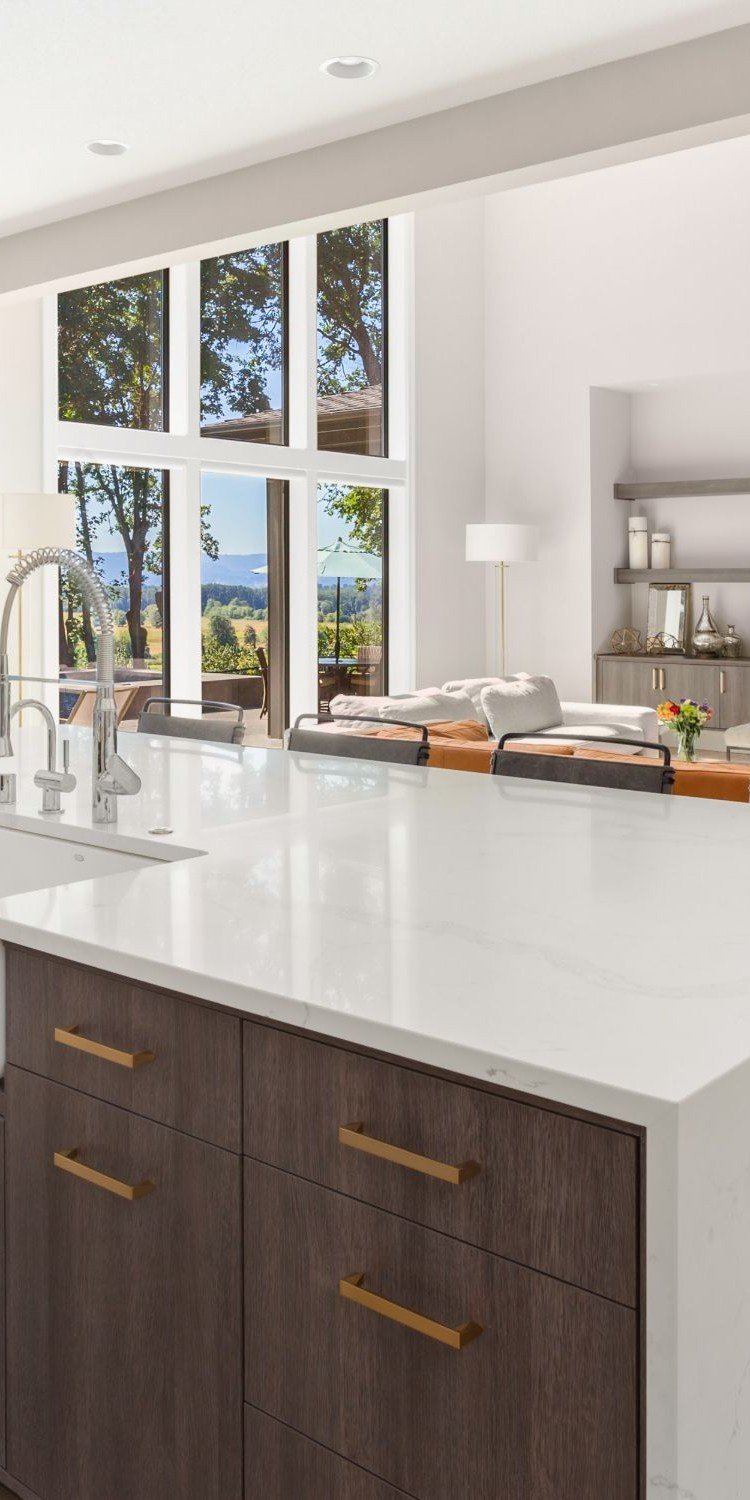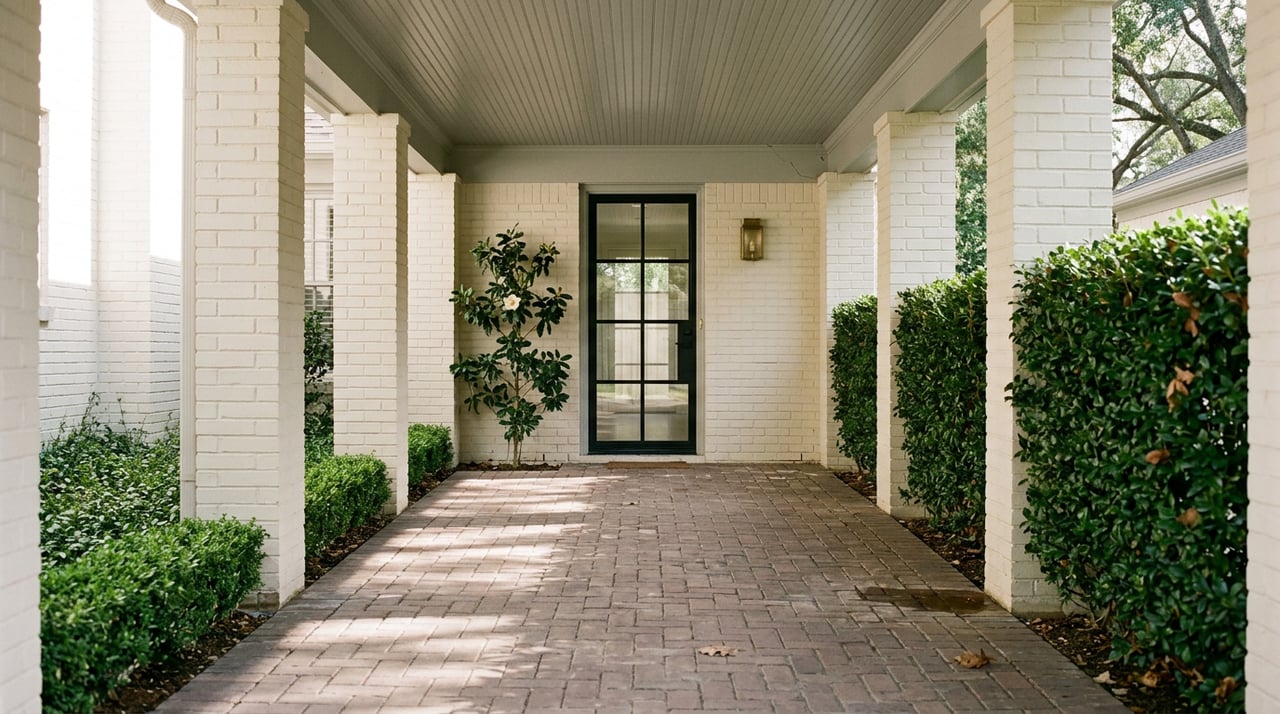
Drive up Gessner Road just north of Memorial City Mall this summer and you will pass a stretch of low industrial buildings mid-transformation. That is Greenside, a roughly 35,000-square-foot redevelopment of former warehouses wrapped around an acre of green space, with play lawns and a pond overlook built into the plan. Construction on the shell wrapped earlier this year, and the tenants who signed on are now finishing their own buildouts inside it.
What is notable is not the square footage. It is the list of names filling that space, and what that list is not. Nobody at Greenside is building a destination restaurant with a six-week reservation window. The lineup reads like a reformer studio, a day spa, three quick-casual food counters, and, as of a June announcement, a coffee shop still without a firm opening date. That is a specific kind of tenant mix, and it tells you something concrete about who this project is actually for.
Two Developers Who Had Never Built Together Before
Greenside is a joint project between MetroNational, the family-owned firm that has operated Memorial City Mall and the surrounding office towers for decades, and Radom Capital, the developer behind Montrose Collective and M-K-T Heights. Michael Hsu Office of Architecture designed the buildings. According to Radom Capital principal Barton Kelly, quoted at the tenant announcement, Greenside represents the firm's first collaboration with MetroNational.
That pairing matters because Radom Capital's other Houston projects, Montrose Collective and Heights Mercantile among them, are walkable urban infill built in neighborhoods that already had foot traffic. Memorial City is not that. It is a car-dependent commercial district built around a regional mall and office towers, including Two Memorial City Plaza, an 18-story building a few blocks from Greenside. Cemex USA and McGriff both keep their headquarters within a short walk of the site, which means a weekday lunch crowd already exists there before a single Greenside tenant unlocks its front door. Radom is applying its infill format to a location where the daytime population was already built in, rather than waiting for residential density to arrive first.
What's Already Filling In, and What's Still Coming
The tenant list arrived in two waves. The first, announced in February 2026, included:
- Honest Mary's, an Austin-born fast-casual bowl concept opening its second Houston location this fall, after an outpost in the River Oaks Shopping Center
- Leemoo, a smoothie and açaí bar making its second Houston appearance following one in Montrose Collective
- Hiatus, a day spa expanding into Texas from its existing footprint
- Solidcore, the reformer-based fitness studio that already has locations in the Heights and Montrose
A second wave, confirmed in June 2026 once construction on the shell was finished, added Original ChopShop, a protein-bowl and salad concept, along with Pizzana. Various outlets have also reported that ChòpnBlọk, the West African concept that holds a Bib Gourmand designation in the Michelin Guide and won Neighborhood Restaurant of the Year at the 2026 CultureMap Tastemaker Awards, may be headed to Greenside as well, though a representative for the brand declined to confirm it when asked.
Then, in mid-June, Merit Coffee entered the picture. The San Antonio-based roaster, founded in 2009 and now operating 14 shops across Austin, Dallas, and San Antonio, opened its first Houston café in July at 5115 Buffalo Speedway in West University, taking over a former Starbucks. A second location is planned for the historic Swift Building in the Heights, and a third for Greenside itself, both targeted for winter 2026. As of this writing, Merit still has not set exact dates for either. The company said in June it would share more details on social media later in the summer, which, as of this writing, is now.
A Tenant List Built Around Weekly Habits, Not Special Occasions
Look at that lineup as a whole and a pattern holds. A reformer class, a bowl of grains and roasted vegetables, a smoothie, a facial, a cup of coffee. These are not once-a-year purchases. They are the kind of stops a person makes two or three times a week if the location is convenient, and skips entirely if it isn't. Nothing on the list requires a reservation or a special occasion to justify the trip.
That is a different growth model than the one Memorial City has used for years. The mall itself is an anchor built for occasional, multi-hour visits. Nearby, Credence, the live-fire restaurant inside the McKinley high-rise, and Haywire, the Dallas-based FB Society concept in the Gateway Memorial City complex, both operate as evening, destination-style dining rather than daily errands. Greenside is filling a different gap: the short, frequent, low-commitment stop that a resident or office worker makes between other things, not the dinner they plan around.
Zoa Eateries, a fast-casual Mediterranean concept opening its third Houston location this summer at 9807 Katy Freeway, fits the same pattern elsewhere in Memorial. Owner Youssef Nafaa's son Adam, who grew up in the area and attended Memorial High School in Spring Branch ISD, has said the move felt personal precisely because it's the kind of place he'd stop into regularly, not a place built for special occasions.
The Coffee Count Was Already Getting Crowded
Merit joining Greenside adds to a coffee scene that had already been filling in quietly around Memorial City. Blacksmith, the well-regarded Montrose coffee shop that sources beans from its affiliated roastery Greenway Coffee, opened a location on the ground floor of Two Memorial City Plaza, sized at roughly 1,700 square feet and built specifically to serve the office tower's occupants. Slowpokes, a coffee-beer-and-wine concept with locations across Houston, opened on Memorial Drive with a walk-up window, its first.
Merit distinguishes itself with a farm-to-cup model, sourcing beans from growers in Central and South America and Africa and roasting them at its San Antonio facility rather than buying wholesale. Founder and CEO Bill Ellis has said the company looked specifically for core neighborhood locations to enter Houston, calling West University, Memorial, and the Heights top priorities from the start. That a fourth serious coffee operator is entering this specific stretch of Memorial in the same year says something about how much daytime foot traffic developers now expect the corridor to generate on its own, without a big-box anchor pulling people in from the freeway.
What Changes for Someone Who Already Lives Here
None of this requires anyone to drive further than they already do. That is the point. A resident near Gessner and I-10 who currently gets a coffee at Blacksmith inside Two Memorial City Plaza, works out somewhere else entirely, and grabs lunch at whatever's closest to the office will, by winter, have all three of those errands available on the same short block. The mall stays the mall. Credence and Haywire stay the reservation-worthy dinner. Greenside is filling in the errands in between, on foot, on a Tuesday.
That is worth watching if you live in Memorial, because it tells you which corner of the neighborhood is about to absorb more daily foot traffic without adding another destination you have to plan a trip around. It also tells you something about how MetroNational, the same owner behind 11 million square feet of Houston commercial real estate, is choosing to grow next to its flagship mall: not with another anchor, but with the small, frequent stops that make a stretch of road feel lived-in rather than just passed through.
If you're weighing what a neighborhood like Memorial actually offers day to day, beyond the school zone and the freeway access everyone already mentions, Nancy Almodovar and her team track these shifts as part of understanding what a property is really worth to the person who'll live in it. Work with Nancy Almodovar to talk through what's changing in Memorial and what it might mean for your own plans.