If you love the polished look of River Oaks gardens, you do not need a sprawling estate to borrow the same ideas. The appeal comes from smart composition, not just square footage. In Houston's long, hot, rainy climate, the best outdoor spaces also need to work hard behind the scenes with shade, drainage, and practical plant choices. Here's how to bring River Oaks-inspired outdoor living into your own home with a look that feels timeless, functional, and refined.
What Defines River Oaks Style
River Oaks was conceived in 1924 as a residential garden community, with trees, open spaces, esplanades, parks, and traffic islands built into its original design. That history helps explain why the area’s best landscapes feel intentional and architectural rather than decorative.
A useful local model is Bayou Bend, where the grounds were planned as a sequence of outdoor “rooms” for living and entertaining. That idea still feels relevant today. Instead of treating the yard as one open area, you can think in terms of connected spaces with distinct purposes.
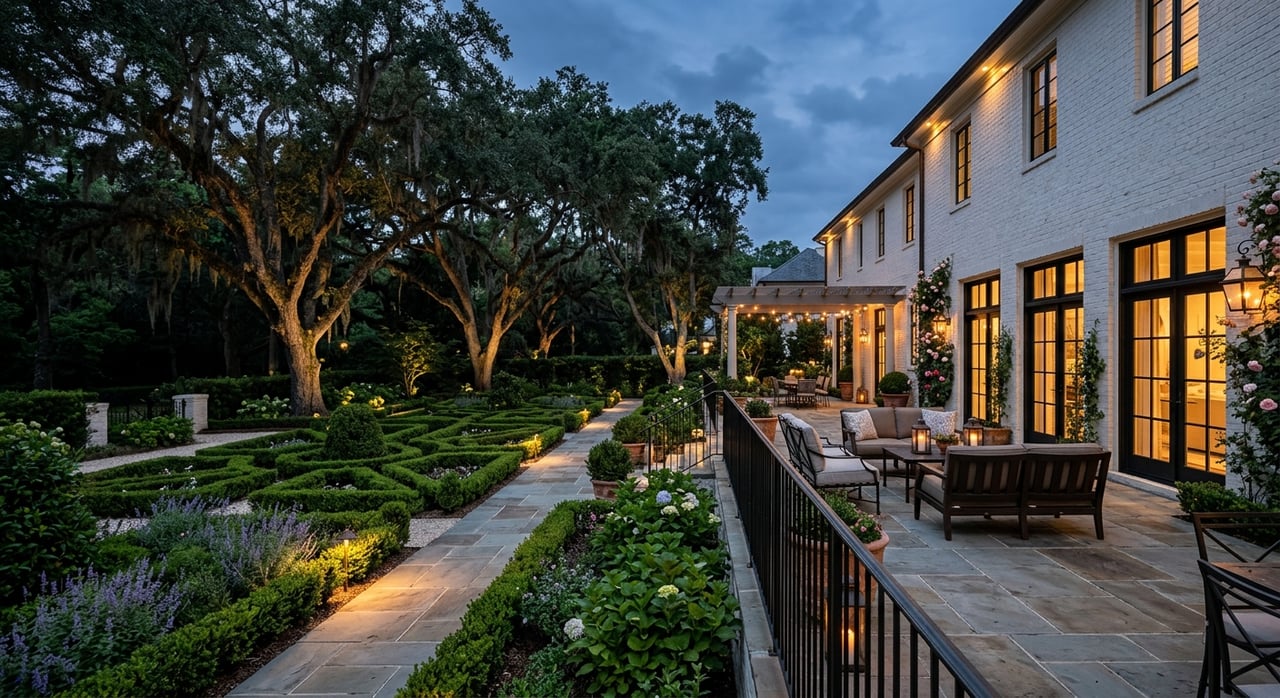
In practice, the River Oaks look is often less about size and more about structure. One strong shade tree, a defined terrace or courtyard, layered shrubs, and a restrained groundcover palette can create a composed outdoor setting that feels tied to the house. It is the same kind of architectural character that defines River Oaks indoors and out.
Start With Outdoor Rooms
One of the most effective River Oaks-inspired moves is to divide your landscape into usable zones. This makes the yard feel more elegant and more livable at the same time.
You might create spaces such as:
- A front garden that frames the entry
- A shaded seating terrace for everyday use
- A courtyard for smaller gatherings
- A poolside area with simple planting around the edges
- A side garden or transition path that connects spaces
The goal is not to overdesign every inch. It is to make each part of the property feel purposeful, with clear edges and an easy relationship to the home’s architecture.
Design for Houston Heat and Rain
Any outdoor plan in the River Oaks area should respond to Houston’s climate. NOAA normals from the nearby Houston Hobby station show an annual mean temperature of 71.1°F and annual precipitation of 55.62 inches. July and August average highs reach 92.9°F and 93.5°F, with mean lows in the mid-70s.
That combination means long warm seasons, real heat stress, and substantial rainfall. For your outdoor living areas, shade, airflow, and drainage matter just as much as color and curb appeal.
A few practical design priorities include:
- Placing seating where tree canopy or structural shade can reduce afternoon heat
- Preserving breezeways instead of blocking airflow with overly dense layouts
- Choosing surfaces and grading that move water away from living areas
- Avoiding plant selections that struggle in heavy rain followed by dry spells
When these basics are handled early, the finished space tends to feel more comfortable year-round.
Build Around a Strong Shade Tree
Trees are one of the most important parts of a landscape plan, especially in Houston. Texas A&M AgriLife notes that trees can add substantial value to a property and may lower ambient air temperature by as much as 8°F.
That cooling effect matters if you want terraces, walkways, and garden rooms to feel usable. It also helps create the mature, settled character that defines many River Oaks properties.
AgriLife’s Houston-suited canopy tree list includes:
- Live oak
- Cedar elm
- Bald cypress
- Nuttall oak
- Swamp chestnut oak
If your property allows for one signature tree, that single choice can shape the entire design. It can anchor the front elevation, soften hardscape, and provide the canopy that makes outdoor living more inviting.
Use Layered Shrubs for Structure
After the tree canopy, shrubs do much of the visual work in a River Oaks-style landscape. They soften driveways and walkways, help frame architecture, and create privacy screening without making the yard feel closed off.
Texas A&M WaterSmart highlights several shrubs suited to the Upper Texas Gulf Coast, including Barbados cherry, dwarf wax myrtle, American beautyberry, yaupon holly, and dwarf palmetto. These types of plants support a layered look without relying on large expanses of high-water turf.
This is where restraint matters. A smaller number of well-placed plant masses often looks more sophisticated than a crowded mix of unrelated varieties.
Add Seasonal Color Carefully
Many of the Houston gardens people admire most balance evergreen structure with a flowering cycle that brings seasonal change. Bayou Bend’s palette includes magnolias, crape myrtles, camellias, azaleas, gardenias, and antique roses.
That mix offers a helpful lesson. The strongest gardens usually have a calm backdrop first, then selective bursts of color that feel intentional rather than overwhelming.
If you want this effect, think in layers:
- Start with trees and evergreen shrubs.
- Add flowering shrubs or specimen plants in key focal areas.
- Repeat the same plant families enough times to keep the design cohesive.
This approach tends to photograph well, age well, and stay consistent with the elegant outdoor style seen throughout River Oaks.
Choose Groundcovers Over Problem Turf
Not every area needs lawn. In places with tree roots, narrow side yards, or awkward edges near terraces and paths, groundcovers can be a smarter and cleaner-looking option.
WaterSmart examples include Gulf Coast Muhly, Palm Leaf Eupatorium, and Blue Carex Sedge Grass. These can help where mowing is difficult or turf simply does not perform well.
Groundcovers also support the composed, architectural feel that works so well in formal and semi-formal Houston landscapes. They reduce visual clutter and can make hardscape edges look more finished.
Use Vertical Elements for Privacy and Texture
Vines and vertical planting can add another layer without taking up much room. According to WaterSmart guidance, vines can be used on trellises, arbors, fences, or brick walls, and once established they can stay relatively low maintenance.
This matters on properties where you want privacy or relief from glare but do not want to wall off the garden. Vertical greenery can soften masonry, define outdoor rooms, and make patios feel more intimate.
Used carefully, these elements can make even a compact yard feel established and layered.
Plan for Houston Soils and Drainage
Beautiful gardens in Houston need more than good planting taste. They also need smart soil planning.
Texas A&M AgriLife notes that clay soils hold too much water and do not allow enough air into the soil. Raised beds can help water drain away from roots and improve air movement, which is especially relevant around courtyards, planting beds, and pool terraces.
This is one reason River Oaks-style landscapes often feel so polished. The most successful spaces usually resolve drainage and root health before the decorative details go in.
If you are planning a renovation, think about these issues early:
- How runoff moves across the site
- Whether planting areas need to be raised
- How hardscape may affect drainage near the home
- Whether root zones around mature trees need protection
Reduce Water Use Without Losing Style
A refined landscape does not have to be water-hungry. Texas A&M WaterSmart says landscapes built around native and adapted plants can reduce irrigation water use by as much as 90% and help reduce polluted runoff entering storm drains.
Regionally appropriate choices can include rain gardens, rainwater harvesting systems, vegetated buffers, and permeable walkways or driveways. These ideas support both appearance and performance, especially in an area that sees heavy rains and long warm seasons. Eco-friendly upgrades like these can also boost property value in River Oaks.
Houston Public Works also recommends watering only when yards need it, preferably at night, and using drip irrigation or soaker hoses, rain barrels, mulch, higher mowing, and pool covers to reduce evaporation. The city also warns against overwatering into streets or storm drains.
For many homeowners, the most durable luxury is a landscape that still looks collected and calm without constant intervention.
Protect Trees and Check Site Rules Early
Before making major outdoor changes, it is wise to review site-related requirements early in the process. The City of Houston does not have zoning, but site plan review addresses items such as setbacks, parking, tree and shrub requirements, and access.
The city’s Tree and Shrub Ordinance also sets standards for planting trees, shrubs, and landscape buffers, and Houston provides protected-tree resources and tree-planting guidance. For homeowners, that means mature-tree preservation and hardscape placement should be considered before plans are finalized.
This step may not be the most glamorous part of a garden project, but it can help you avoid costly revisions and preserve one of the property’s biggest visual assets.
Simple River Oaks Ideas to Borrow
If you want the feel of River Oaks without a full estate-scale redesign, focus on a few proven ideas:
- Center the design around one major tree or focal garden feature
- Create a terrace, courtyard, or seating area with clear boundaries
- Use layered shrubs to soften architecture and define privacy
- Limit the number of plant varieties for a cleaner, more tailored look
- Replace weak lawn areas with groundcovers where appropriate
- Prioritize drainage, shade, and airflow from the start
These choices can work across many architectural styles, from classic brick homes to cleaner-lined contemporary properties. What matters most is the sense of order, calm, and connection between the house and the landscape. Whether you are comparing River Oaks, Tanglewood, or Memorial, thoughtful outdoor living plays a role in what draws people to these neighborhoods.
If you are evaluating a home in River Oaks or preparing one for sale, outdoor living can influence both daily enjoyment and presentation. Thoughtful gardens, strong tree canopy, and usable exterior spaces often help a property feel more established, more private, and more complete. For tailored guidance on buying or selling in Houston’s luxury market, connect with Nancy Almodovar.
FAQs
What makes a garden feel like River Oaks?
- A River Oaks-inspired garden usually feels architectural and layered, with strong trees, defined outdoor rooms, restrained planting, and a close connection to the home.
What plants work well for outdoor living in Houston?
- Texas A&M WaterSmart highlights native and adapted plants for the Upper Texas Gulf Coast, including canopy trees like live oak and cedar elm, plus shrubs such as yaupon holly, dwarf wax myrtle, and dwarf palmetto.
Why is shade so important for River Oaks outdoor spaces?
- Houston’s long warm season and summer highs in the low 90s make shade essential for comfort, and trees may also lower ambient air temperature by as much as 8°F.
Are raised beds helpful in Houston landscapes?
- Yes. Texas A&M AgriLife says clay soils can hold too much water and limit air movement, and raised beds can improve drainage and root health.
Can you create a luxury outdoor look with less lawn?
- Yes. Layered shrubs, groundcovers, vines, and defined terraces can create a polished look while reducing reliance on high-water turf.
What should homeowners check before an outdoor renovation in Houston?
- Homeowners should review site-related requirements early, including tree preservation, setbacks, access, and the City of Houston’s tree and shrub standards.